


"Super easy to use and mess-free, was also shipped very quickly"
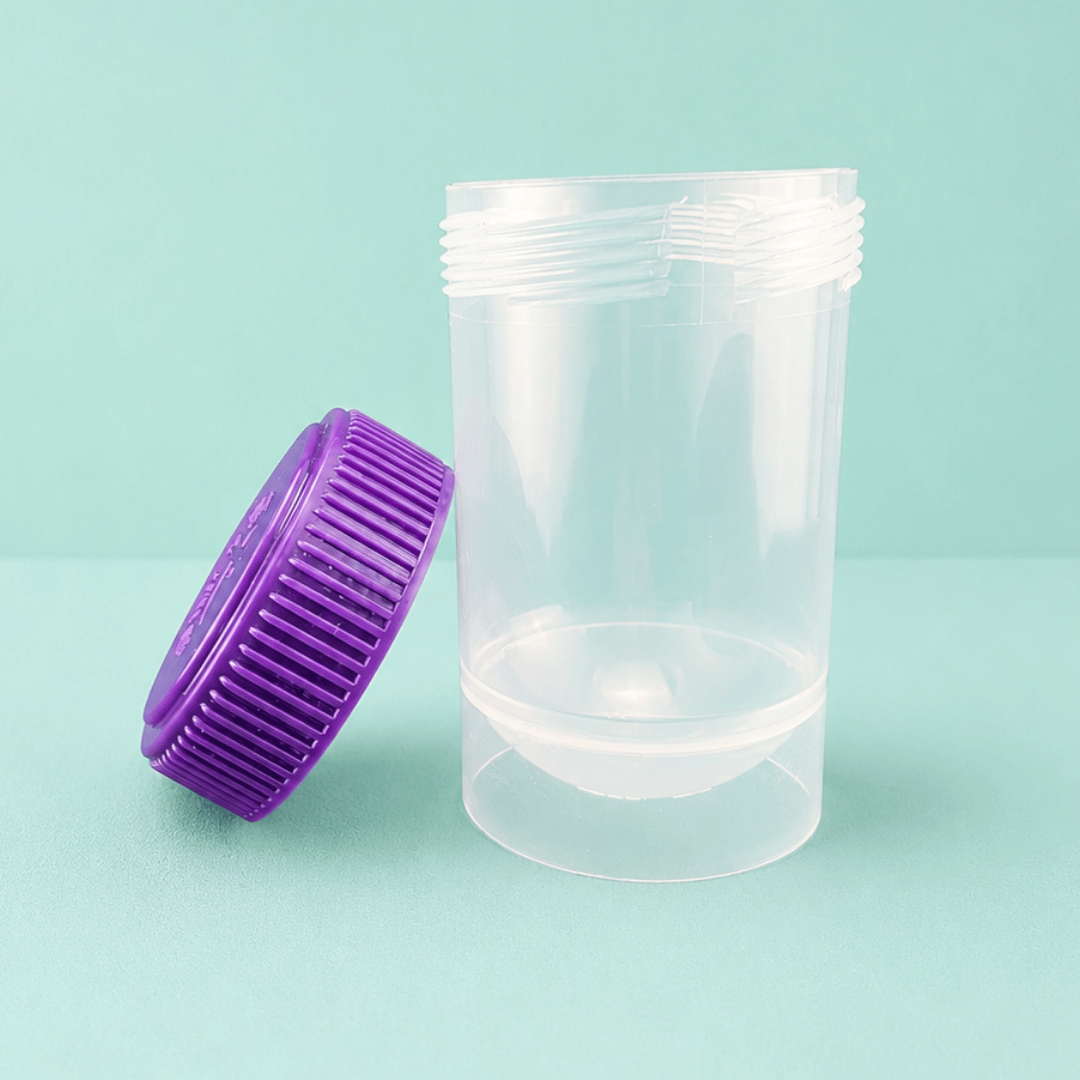
40mL round bottom Sterile Sperm Collection Cups
40mL round bottom Sterile Sperm Collection Cups
Couldn't load pickup availability

Taryn's recommendation
Since you added this item to cart you might also need ... 👇🏻

Imagined by display:bold;  — Get in Touch
Why you'll love them
-
✓
A round bottom that lets your syringe reach every last drop, with nothing lost in the corners -
✓
Sterile and made from medical-grade plastic for clean, safe collection -
✓
A secure, easy-seal lid that guards against leaks and contamination -
✓
A generous 40mL size that's simple to collect into and easy to handle -
✓
Works seamlessly with our round-tip InsemiAid syringe -
✓
Available in packs of 5 or 10
These cups are for you if
- You're doing at-home insemination and want a clean, fuss-free way to collect and transfer a sample
- You're working with a known donor and need a sterile cup to collect into
- You've used flat-bottomed specimen cups and lost part of the sample to the corners
- You want something sterile and reliable, whether for home use or a clinic sample
Details
How to use it
Open a sterile cup just before you need it and collect the sample directly into it. Seal the lid firmly to keep everything clean and contained. When you're ready, the round bottom lets the sample pool in one place so your syringe can draw up every last drop. For home insemination, it's best to use a fresh sample within about 30 to 60 minutes, kept close to body temperature rather than in the fridge, as sperm are happiest when they're warm. Each cup is single-use.
Materials & safety
Made from sterile, medical-grade plastic with a secure easy-seal lid. Keep each cup sealed in its packaging until you're ready to use it, and use once before disposing. For sample collection only.


Step by step: home artificial insemination
It sounds like a tiny detail, but the shape of the cup makes a real difference. Most specimen cups have a flat bottom with squared-off corners, and when you go to draw the sample up with a syringe, some of it gets stuck in those edges and left behind. When you're trying to conceive, every drop counts, so losing any to the corners of a cup is the last thing you want.
Meet our round bottom sperm collection cups. The curved base lets the sample gather in one place, so your syringe can sit right in it and draw up everything, nothing wasted, nothing trapped. They're sterile and made from medical-grade plastic, with a secure easy-seal lid that keeps the sample clean and contained from collection to transfer. At 40mL they're roomy and easy to collect into, and they pair perfectly with our round-tip InsemiAid syringe.
Whether you're collecting from a known donor, providing a sample for a clinic, or inseminating at home, these cups work for all of it. Collect into a fresh sterile cup, seal it, keep it close to body temperature, and use it within the hour for the best results. Available in packs of 5 or 10, so you can stock up for a single cycle or keep a few on hand.
A small thing, yes. But it's exactly the kind of small thing that makes the whole process feel cleaner, simpler and more in your control.
- A round bottom so your syringe reaches every last drop
- Sterile, medical-grade plastic with a secure easy-seal lid
- 40mL capacity, in packs of 5 or 10
About this sperm cup
Why does a round bottom matter?
A flat-bottomed cup traps part of the sample in its squared-off corners, where a syringe can't reach. The round base lets everything pool in one place so your syringe can draw up every last drop, which matters when you don't want to lose any of the sample.
How long is a sample good for in the cup?
For home insemination, it's best to use a fresh sample within about 30 to 60 minutes of collection. Keep the sealed cup close to body temperature, not in the fridge and not anywhere hot, as sperm stay healthiest when they're kept warm.
Can I use these for a clinic semen analysis?
Yes. They're sterile, medical-grade cups, which makes them suitable for collecting a sample for a semen analysis or a clinic appointment. It's worth checking any specific requirements your clinic has, but a sterile collection cup like this is the standard.
Are they suitable for collecting from a known donor?
Absolutely. A sterile cup is the simplest, cleanest way for a donor to provide a sample, which you can then use with a syringe for insemination. Each cup is single-use and sealed until you open it.
How many cups will I need?
One per collection. The pack of 5 is great for a single cycle or a few attempts, and the pack of 10 gives you a bigger supply if you're tracking across several cycles.
Are they sterile?
Yes. Each cup is sterile and sealed in its packaging until you open it, so it's ready for clean collection straight away. Use once, then dispose.